
 Request Service
How to Future-Proof Your Home for Upcoming HVAC and Electrical Technology Changes
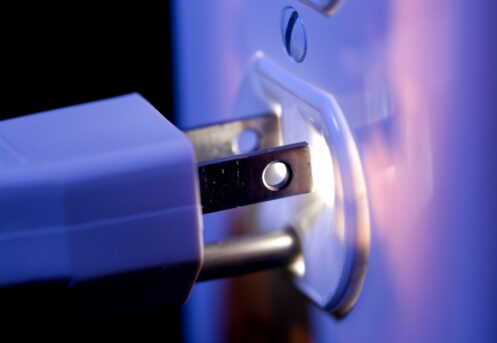
Some of the best ways to future-proof your home are to preserve electrical capacity, leave room for new circuits, and plan wiring pathways before you actually need them. That gives you more flexibility to add equipment such as heat pumps, EV chargers, smart electrical controls, and newer HVAC systems without paying to undo earlier work.
To learn more about why and how to future-proof your home with just a few key changes, read on.
Give Your Electrical System Room to Grow
Before adding major HVAC or electrical equipment, check whether your existing panel has enough capacity and open breaker space for future loads. Homes are increasingly adding 240V equipment like heat pumps, EV chargers, electric water heaters, and other high-demand appliances.
That doesn’t mean every home needs a 200-amp service upgrade. We can perform a load calculation and evaluate your electrical panel to determine what the home can realistically support. In some cases, a subpanel or load-management system may provide the flexibility you need without a full service replacement.
Plan Wiring Pathways Before You Need Them
If walls, ceilings, or electrical equipment are already accessible, planning for future wiring can save significant labor later. Running conduit, preserving panel space, or identifying practical routes for future circuits is usually easier during an existing project than after everything is finished.
- Heat pumps: New heat pumps may have different electrical requirements than the furnace or AC they replace. Our let us account for both equipment performance and the power needed to support it.
- EV charging: Even if you don’t own an EV today, planning where a future 240V circuit would run can prevent more invasive electrical work later. Adding an EV charging station can also make your home attractive to new buyers as EVs become more popular.
- Future HVAC replacements: New AC and heat pump systems are already changing as manufacturers adopt lower-global-warming-potential refrigerants. Leaving enough electrical capacity and equipment space gives you more options when replacement time comes.
What Is Electrical Load Management?
Smart panels and automatic load controls can help some homes support additional equipment without immediately increasing electrical service size. These systems can manage when large electrical loads operate, reducing the chance that several high-demand appliances draw maximum power at the same time.
This can be especially useful in older homes where upgrading the main service would be costly or difficult. It isn’t the right solution for every property, but it gives homeowners another option when planning for electrification.
Future-Proof Your Home in De Soto, MO
You don’t need to predict exactly which technology you’ll install five or ten years from now. You just need to avoid making today’s improvements unnecessarily restrictive.
You don’t need to know exactly which HVAC or electrical technology you’ll add five or ten years from now. The goal is to make choices today that leave you with more options later. That can mean keeping room in the panel for new circuits, avoiding wiring layouts that are hard to expand, and making sure your electrical service can handle likely future loads such as a heat pump or EV charger.
If you’re planning an HVAC or electrical upgrade in De Soto, contact De Soto Electrical Products. We can help you make improvements that meet your current needs while leaving room for future technology.